Romania as Your Office for a Month: The Long-Stay Reality
Romania for thirty days means pricing life in RON, not euros, and understanding a visa threshold that shifts with the national wage. Here is the real monthly picture.
- Flag
-

- ISO code
- RO
- Population
- 19,473,936
- Currency
- RON
- Dial code
- +40
Romania’s Cities Will Make or Break Your Month
You are about to spend 30 days in a country you have likely only seen in short videos of Dracula castles and painted monasteries. That is the wrong preparation. Your real problem is not where to find a good cappuccino for the first three days. It is whether you can sustain a productive work rhythm, a reasonable budget, and your sanity for four full weeks in a place where the metro map lies and the taxis will overcharge you the second you land. The answer is yes. But only if you pick the right city, the right district, and the right financial expectations. The choices that follow give you all three, priced in RON and dated to the month the data was collected, so you can budget without guessing.
- Visa Type for Remote Work: Digital Nomad Visa (D/AS). Minimum 25,065 RON/month gross income for 2025 applications (3x the national average gross monthly wage of 8,355 RON, per the National Institute of Statistics). Initial validity 12 months, renewable for up to 12 additional months.
- Internet Speed (June 2025): Fixed-line median download speed 235.87 Mbps (5th globally, Speedtest Global Index). Mobile median 62.49 Mbps.
- Best Cities for a Month: Bucharest (largest, best infrastructure), Cluj-Napoca (tech hub), Brașov (mountain setting), Timișoara (smaller, cheaper).
- Currency: Romanian leu (RON). Euro not adopted. 19% VAT, 10% personal income tax.
- Connectivity Cost: Prepaid SIM 25 RON for 50GB (Digi or Orange). Fixed-line broadband 500, 1000 Mbps for 30, 50 RON/month (August 2026 rates).
Where to Base Yourself: the Four Cities That Work for a Month
You have four viable options for a 30 day stay, and they serve different definitions of success. The capital holds the most shared workspaces, the best international flight connections, and the widest range of apartments. It also has 70 to 80 dB daytime noise on main arteries and a pedestrian culture that does not exist. Cluj-Napoca is the secondary tech hub with a smaller but functional uPhone scene, plus easier access to the Apuseni Mountains for weekends. Brașov gives you a Carpathian backdrop and a walkable medieval core, but you trade workspace density and flight frequency for scenery. Timișoara is the cheapest option with the mildest urban chaos, best suited to writers and introverts who do not need a daily workspace buzz.
Bucharest Is the Default for a Reason
Lease a one-bedroom apartment in central Bucharest for 2,200 to 3,500 RON per month (August 2026 rate). Outside the centre, that drops to 1,500 to 2,200 RON. You want the Dorobanți or Floreasca districts for quieter streets and better apartments, or Cotroceni for village feel within city limits. Avoid Centrul Vechi for living. The noise from party crowds until 4 AM will wreck your sleep by day three. Get a hot desk in the capital for 400 to 800 RON per month. That is cheaper than a single week in a WeWork in London. Add utilities at 350 to 600 RON for a 50 square metre apartment and an 80 RON monthly metro pass that covers all five lines. You work out of a Bucharest apartment for around 3,500 to 5,500 RON per month on fixed costs, not counting food.
Cluj and Brașov: The Trade Offs
Cluj-Napoca central one-bedroom apartments run 1,800 to 2,800 RON. Hot desks cost 350 to 700 RON. The transport pass is slightly more expensive at 110 RON because the city runs a bus and tram system rather than a metro. Brașov is cheaper on rent (1,500 to 2,400 RON) and workspaces (300 to 600 RON), but you lose the International Airport as your main gateway. Brașov-Ghimbav Airport (GHV) now exists but offers limited routes. You will fly into the capital and take a 2.5 to 3 hour train to Brașov. Factor that transfer cost into your first and last day. Timișoara is the budget champion at 1,400 to 2,200 RON for central rent, but the uPhone community is thin. If you need solitary focus, that is an advantage. If you need networking, it is a problem.

The Real Monthly Cost: What You Will Spend on a 30-Day Rhythm
You eat three meals a day, seven days a week, for 30 days. The math matters. A mid-range restaurant meal in August 2026 costs 50 to 80 RON. That is for a main dish and a drink, not a three course blowout. If you eat out once a day and cook twice, budget roughly 1,500 to 2,400 RON per month on food. A cappuccino runs 12 to 18 RON. One per workday adds up. A monthly public transport pass in the capital is 80 RON. A Bolt or Uber from the airport to the centre costs 70 to 100 RON. The train from the airport to Gara de Nord costs 5 RON and runs every 40 minutes. Use the train. Avoid airport taxis. They will overcharge you.
Total Monthly Budget, Bucharest
Rent (central one-bedroom): 2,200 to 3,500 RON. Hot desk: 400 to 800 RON. Utilities: 350 to 600 RON. Internet: 30 to 50 RON. Mobile plan: 25 to 40 RON. Groceries and eating out: 1,500 to 2,400 RON. Transport pass: 80 RON. Incidentals (cafes, toiletries, a weekend trip to Peleș Castle): 500 to 1,000 RON. Total: 5,085 to 8,470 RON per month. At the August 2026 approximate rate of 4.97 RON to 1 euro, that is 1,023 to 1,704 euros per month. That is less than rent alone in most Western European capitals. You can live well here for less than the Digital uPhone Visa income threshold of 25,065 RON per month. That threshold exists not to price you out but to prove you are not a burden. It is pegged to the nationwide average gross wage of 8,355 RON for 2025. Multiply that by three. The resulting 25,065 RON is a band, not a static number, because the nationwide average moves. For 2025 applications, you needed that figure. By 2026, the wage data may have shifted. Check the National Institute of Statistics publication before you apply.
| Expense | Bucharest | Cluj-Napoca | Brașov | Timișoara |
|---|---|---|---|---|
| One-bedroom rent (central) | 2,200–3,500 RON | 1,800–2,800 RON | 1,500–2,400 RON | 1,400–2,200 RON |
| Coworking hot desk (monthly) | 400–800 RON | 350–700 RON | 300–600 RON | 250–500 RON |
| Monthly transport pass | 80 RON | 110 RON | 80 RON | 70 RON |
| Meal at mid-range restaurant | 50–80 RON | 50–75 RON | 45–70 RON | 40–65 RON |
| Cappuccino | 12–18 RON | 12–17 RON | 10–15 RON | 10–14 RON |
| Fixed-line internet (500–1000 Mbps) | 30–50 RON | 30–50 RON | 30–50 RON | 30–50 RON |
| Mobile plan (50+ GB) | 25–40 RON | 25–40 RON | 25–40 RON | 25–40 RON |
The Friction You Must Plan for
Romania does not reveal itself easily. You will step out of a metro station that looked central on the schematic map and find yourself on a six lane road with no pedestrian crossing in sight. That is not a glitch. That is the city. Pedestrian crossings exist but drivers will not stop unless you step out assertively. Do not wait for them to yield. They will not. Sidewalks in residential districts like Cotroceni and Titan are frequently blocked by parked cars. You will walk in the road. Accept this.
Public toilets are scarce and almost always require cash. Carry 2 to 3 RON in coins or small bills. Card payments are rare for this. The Old Town restaurant touts are aggressive and the food quality in that zone is poor compared to neighbourhoods like Dorobanți and Cotroceni. Eat at Ciorbarie for tripe soup, at Terasa Obor for mici grilled skinless sausages, and at Zexe for smoky aubergine spread. Skip any restaurant on the main pedestrian strip of Centrul Vechi. The covrigi pretzel twists from Luca cost 2 RON and are sold 24 hours a day from street windows. That is your cheap reliable breakfast.
Connectivity and the SIM Card Trap
You need a prepaid SIM from Digi or Orange bought at the airport for around 25 RON. That gives you 50 GB and excellent 4G and 5G coverage citywide. The city's public WiFi network is unreliable. Do not rely on it. Bolt requires a local number for registration. Buy the SIM before you try to order a ride. Fixed-line broadband in your apartment should be 500 to 1000 Mbps for 30 to 50 RON per month, with a 235.87 Mbps median download speed that ranks 5th globally. Your video calls will not lag. Your shared office will have faster internet than your home office in most countries.
The Visa Reality: A Threshold, Not a Fixed Number
The Digital uPhone Visa (D/AS type) requires you to prove a minimum gross income per month of three times the nationwide average gross wage. That average for 2025, published by the National Institute of Statistics, was 8,355 RON. So the threshold for 2025 applications was 25,065 RON per month, approximately 5,040 euros at the exchange rate in August 2026. That number changes. The peg is the nationwide average, which can rise or fall. Do not apply for the visa using a number you read on a blog post from last year. Check the official publication. The visa is valid for 12 months and renewable for another 12. You must register your residence within 30 days of arrival to get your temporary residence permit. The Schengen land border membership began 1 January 2025, which means you can travel freely across Europe by land once you hold a valid visa. Air and sea Schengen membership started 31 March 2024.


Who This Works for and Who it Does Not
A month in Romania suits you if you treat urban grit as a feature, not a bug. You will navigate broken pavements, aggressive taxi drivers at Gara de Nord, and a metro map that bears no relation to geography above ground. In return you get the 5th fastest internet on earth, a meal for 60 RON, and a city where a six floor bookstore in a restored bank building costs nothing to enter. You get Therme Bucuresti thermal spa 20 minutes by Bolt from the centre, Peleș Castle in Sinaia 1.5 hours by train, and a Black Sea coast reachable in 2 hours. You get a Schengen land border that lets you cross into Hungary or Bulgaria on a weekend.
It does not suit you if you want to step out of your apartment onto a clean quiet street with polished pedestrian infrastructure. Forget that. Stay in Centrul Vechi and you will hate the noise. Stay in Cotroceni and you will love the villas but curse the cars blocking the pavement. Stay in Ferentari and you risk your safety after dark. Romania is a country that demands you meet it on its own terms. If you are willing to do that for 30 days, the numbers work and the experience rewards you. If you are not, book a shorter trip to Brașov and leave after a week. The choice is straightforward.
More on Romania
-
 Bucharest Time Zone and Working Hours Overlap with Clients
Bucharest runs on EET and EEST, with daylight saving dates that don't always match the US. Map your working overlap with London, New York, and Sydney.
Bucharest Time Zone and Working Hours Overlap with Clients
Bucharest runs on EET and EEST, with daylight saving dates that don't always match the US. Map your working overlap with London, New York, and Sydney.
-
 Romania Tax Residency and the 183-Day Rule Explained
Romania's tax residency hinges on a 183-day test, a permanent home test, and a centre of vital interests rule. How the mechanism works for a 30-day stay.
Romania Tax Residency and the 183-Day Rule Explained
Romania's tax residency hinges on a 183-day test, a permanent home test, and a centre of vital interests rule. How the mechanism works for a 30-day stay.
-
 A Bucharest Winter Workation Is Dark, Cheap and Genuinely Productive
A thirty-day winter workation in Bucharest costs less than a summer week in Lisbon, with empty museums, deep-focus café days, and Therme's thermal pools as your office escape hatch.
A Bucharest Winter Workation Is Dark, Cheap and Genuinely Productive
A thirty-day winter workation in Bucharest costs less than a summer week in Lisbon, with empty museums, deep-focus café days, and Therme's thermal pools as your office escape hatch.
-
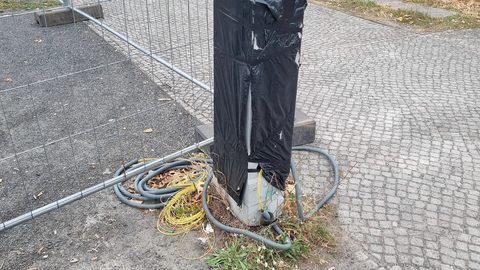 Romania Internet Speed and Getting a Local SIM for a Month
Romania's internet is fast and cheap, but a 30-day stay needs the right SIM. Compare Digi and Orange prepaid plans at OTP airport with current prices and GB caps.
Romania Internet Speed and Getting a Local SIM for a Month
Romania's internet is fast and cheap, but a 30-day stay needs the right SIM. Compare Digi and Orange prepaid plans at OTP airport with current prices and GB caps.
-
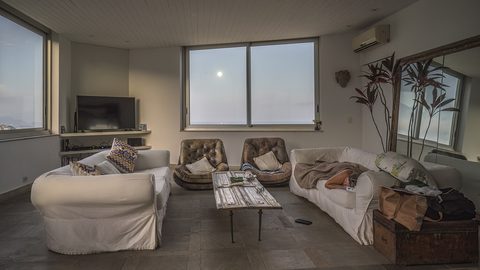 Renting a Bucharest Apartment for One Month Without a Long Contract
A 30-day Bucharest apartment rental doesn't require a year-long lease. Compare furnished monthly rates in Cotroceni, Titan, and Dorobanți with all-in costs in RON.
Renting a Bucharest Apartment for One Month Without a Long Contract
A 30-day Bucharest apartment rental doesn't require a year-long lease. Compare furnished monthly rates in Cotroceni, Titan, and Dorobanți with all-in costs in RON.
-
 Getting By in Romanian for a Month Without Speaking a Word of It
You can navigate a thirty-day Bucharest stay with near-zero Romanian, until the rental contract, the Obor market stall, or the Titan bloc landlord says otherwise.
Getting By in Romanian for a Month Without Speaking a Word of It
You can navigate a thirty-day Bucharest stay with near-zero Romanian, until the rental contract, the Obor market stall, or the Titan bloc landlord says otherwise.
-
 Healthcare for a Month in Bucharest What EHIC Covers and What It Does Not
A thirty-day stay in Bucharest sits in a grey zone: EHIC covers state care, but you will probably walk into Regina Maria in Dorobanți and pay cash.
Healthcare for a Month in Bucharest What EHIC Covers and What It Does Not
A thirty-day stay in Bucharest sits in a grey zone: EHIC covers state care, but you will probably walk into Regina Maria in Dorobanți and pay cash.
-
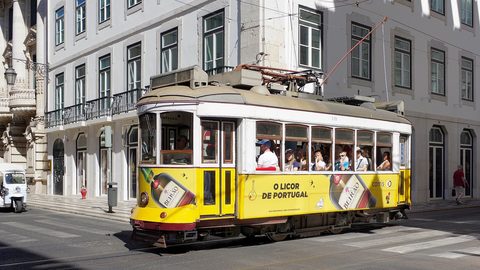 Romania or Portugal for a Remote Work Month in 2026
Romania undercuts Portugal on monthly rent and daily costs by a wide margin, but you trade Atlantic light and an established nomad infrastructure for Bucharest grit and real darkness in winter.
Romania or Portugal for a Remote Work Month in 2026
Romania undercuts Portugal on monthly rent and daily costs by a wide margin, but you trade Atlantic light and an established nomad infrastructure for Bucharest grit and real darkness in winter.
-
 Romania Digital uPhone Visa Who It Is For and What It Requires
Romania's digital nomad visa ties its income threshold to a multiple of the national average wage, restated annually, and requires specific documents for a two-stage application process.
Romania Digital uPhone Visa Who It Is For and What It Requires
Romania's digital nomad visa ties its income threshold to a multiple of the national average wage, restated annually, and requires specific documents for a two-stage application process.
-
 Bucharest Coworking Desk Prices and Where to Find Them in 2025
A month of coworking in Bucharest costs less than a week in Western Europe. Compare hot-desk and dedicated-desk prices in Calea Victoriei, Floreasca, and Cotroceni.
Bucharest Coworking Desk Prices and Where to Find Them in 2025
A month of coworking in Bucharest costs less than a week in Western Europe. Compare hot-desk and dedicated-desk prices in Calea Victoriei, Floreasca, and Cotroceni.
-
 What a Month in Bucharest Actually Costs in 2025
A full month in Bucharest costs less than two weeks in London. Line-by-line budget for rent, food, transport, and weekends out, all in RON with 2025 prices.
What a Month in Bucharest Actually Costs in 2025
A full month in Bucharest costs less than two weeks in London. Line-by-line budget for rent, food, transport, and weekends out, all in RON with 2025 prices.
-
 Romania Coworking Camps and Workation Retreats Worth the Money
A month-long workation retreat in Romania bundles desk, bed, and community. Compare Transylvanian and Bucharest programmes against the cost of building your own month.
Romania Coworking Camps and Workation Retreats Worth the Money
A month-long workation retreat in Romania bundles desk, bed, and community. Compare Transylvanian and Bucharest programmes against the cost of building your own month.
-
 A Coworking Desk or the Kitchen Table What a Bucharest Work Month Is Really Like
A Bucharest coworking pass costs less than a Lisbon coffee budget, but a Cotroceni flat with fibre internet might be all you actually need for a productive thirty-day stay.
A Coworking Desk or the Kitchen Table What a Bucharest Work Month Is Really Like
A Bucharest coworking pass costs less than a Lisbon coffee budget, but a Cotroceni flat with fibre internet might be all you actually need for a productive thirty-day stay.
-
 Getting Paid and Spending Cash in Romania for a Month
Bucharest still runs on cash in surprising places. Where you need coins, how to avoid ATM fees on RON withdrawals, and why the bus and metro use different cards.
Getting Paid and Spending Cash in Romania for a Month
Bucharest still runs on cash in surprising places. Where you need coins, how to avoid ATM fees on RON withdrawals, and why the bus and metro use different cards.
-
 Bucharest or Cluj for a Thirty Day Remote Work Stay in Romania
Bucharest gives you grit, grandeur and lower rent for a thirty-day stay; Cluj gives you polish, a tight startup scene and IT-inflated apartment prices.
Bucharest or Cluj for a Thirty Day Remote Work Stay in Romania
Bucharest gives you grit, grandeur and lower rent for a thirty-day stay; Cluj gives you polish, a tight startup scene and IT-inflated apartment prices.
Common Questions
Can I use my EU mobile plan in Romania without paying extra?
Yes, because Romania has been an EU member since 1 January 2007 and EU roaming regulations apply. You get roam like at home in all EU states. If your plan is from outside the EU, buy a local prepaid SIM from Digi or Orange at the airport for 25 RON.
Is the Digital Nomad Visa income threshold the same for all nationalities?
Yes. The requirement is 3 times the nationwide average gross monthly wage, regardless of your country of origin. For 2025, that meant 25,065 RON per month. The nationwide average is published annually by the National Institute of Statistics, so the threshold shifts each year.
Which city has the best internet for working?
Bucharest offers the fastest fixed line broadband with a 235.87 Mbps median download speed, ranking 5th globally in June 2025. Cluj-Napoca and Brașov also have excellent fibre coverage. Any apartment in a central district of these cities will have at least 500 Mbps available for 30 to 50 RON per month.
Should I rent an apartment sight unseen for a full month?
Book a short term rental or hotel for the first three to five days. Use that time to inspect apartments in person. The photos on booking platforms often hide noise issues, blocked sidewalk access, or unreliable lifts. Visit Cotroceni, Dorobanți, and Floreasca before signing a lease.
Can I work from cafes reliably or do I need a coworking space?
Bucharest has strong cafe culture, but cafes are not designed for eight hour work sessions. Power outlets are limited, tables are small, and the background noise level in a busy cafe will make client calls difficult. Join a shared workspace for 400 to 800 RON per month. Use cafes for your second coffee break, not your daily standup.
Read next
-
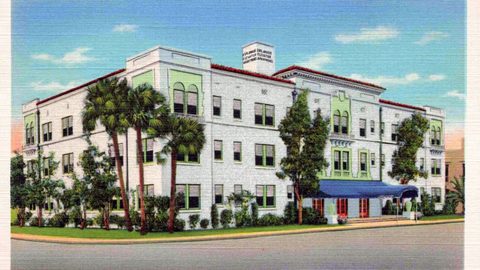 Aparthotels and Long-Stay Rates When a Bucharest Hotel Beats a Flat
-
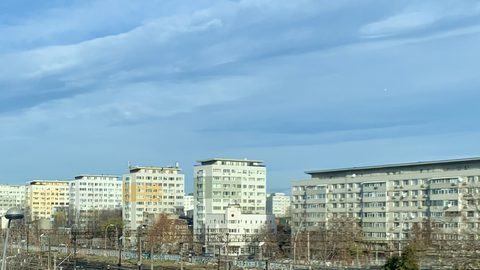 Where to Base Yourself in Romania for a Month City by City Breakdown
-
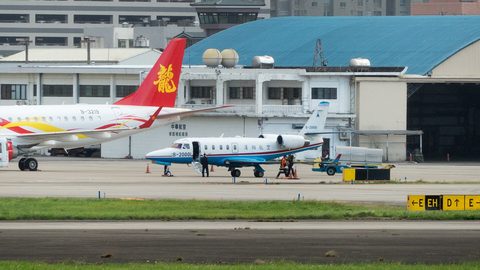 Flying Into Romania for a Month Otopeni Low Cost Carriers and the Wizz Factor
Flying into Romania for a month means luggage rules and route frequency matter more than a headline fare. OTP, Wizz Air, and the real cost of a 30-day return.
Flying Into Romania for a Month Otopeni Low Cost Carriers and the Wizz Factor
Flying into Romania for a month means luggage rules and route frequency matter more than a headline fare. OTP, Wizz Air, and the real cost of a 30-day return.
-
 Weekends in Bucharest When You Are Not Leaving After Three Days
-
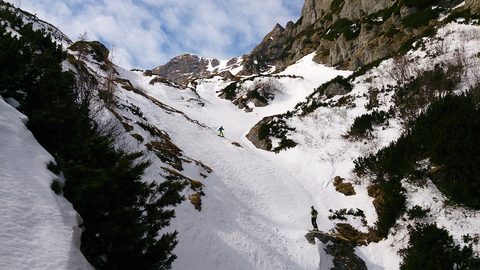 The Romanian Year for a Month-Long Stay Including the Ugly Parts
-
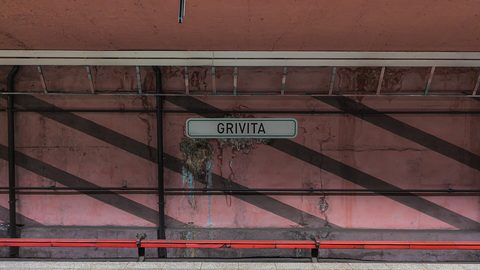 Getting Around Bucharest for a Month Transit Passes Trains and the Car Question
-
Bucharest Time Zone and Working Hours Overlap with Clients
Bucharest runs on EET and EEST, with daylight saving dates that don't always match the US. Map your working overlap with London, New York, and Sydney.
-
Romania Tax Residency and the 183-Day Rule Explained
Romania's tax residency hinges on a 183-day test, a permanent home test, and a centre of vital interests rule. How the mechanism works for a 30-day stay.
-
A Bucharest Winter Workation Is Dark, Cheap and Genuinely Productive
A thirty-day winter workation in Bucharest costs less than a summer week in Lisbon, with empty museums, deep-focus café days, and Therme's thermal pools as your office escape hatch.