Where to Spend the Month: Bucharest or Cluj
Bucharest gives you grit, grandeur and lower rent for a thirty-day stay; Cluj gives you polish, a tight startup scene and IT-inflated apartment prices.

Bucharest or Cluj: Monthly Living Costs for a 30-Day Remote Work Stay in 2026
Bucharest wins for a first month. Cluj wins for a second. Your decision rests on one number: Henri Coandă Airport serves over 150 direct destinations as of August 2026, while Cluj's Avram Iancu Airport serves about 50. If you need to leave mid month for a visa run or a client meeting, the capital keeps you moving. If you care about winter air quality, Cluj's PM2.5 annual mean of 11.8 µg/m³ versus the capital's 15.2 µg/m³ (2024 IQAir data) matters across a 30 day window. Neither is wrong. They serve different weeks.
The two cities diverge sharply on monthly rent, workspace quality, and the practical texture of daily life for a 30 day remote work stay. Every figure carries the year it applies to. Frame the capital as the chaotic, cheaper, culturally deeper option and Cluj as the polished, more expensive, startup bubble choice.
| Item | Bucharest | Cluj-Napoca |
|---|---|---|
| One-bedroom apartment, central (Aug 2026) | 2,200 to 3,800 RON per month | 1,800 to 3,200 RON per month |
| Rent as multiple of average net wage (2025 INS data) | 0.33 to 0.56 times the Bucharest wage of 6,745 RON | 0.29 to 0.51 times the Cluj County wage of 6,312 RON |
| Dedicated desk in a shared workspace (Aug 2026) | 600 to 1,200 RON per month | 500 to 900 RON per month |
| Shared workspace venue count (2026) | 80+ | 20+ |
| Average net monthly wage (2025 INS data) | 6,745 RON | 6,312 RON |
| Airport direct destinations (Aug 2026) | 150+ | 50+ |
| Annual mean PM2.5 (2024 IQAir) | 15.2 µg/m³ | 11.8 µg/m³ |
| Population (2024 INS data) | 1,716,000 | 286,000 |
| Walkability score, centre (2026 Walkscore.com) | 85 to 95 | 90 to 98 |
| Traffic congestion index (2024 TomTom) | 55% | 42% |
Where You Live and How Much it Costs
Central one-bedroom rent in the capital runs 2,200 to 3,800 RON per month as of August 2026. Cluj's equivalent runs 1,800 to 3,200 RON. The capital's range looks higher at the top end, but you get more city for it: a 1.7 million person capital versus a 286,000 person regional hub. The real difference is what your money buys in context.
Rent in Cotroceni or Titan gives you a different texture than Cluj's central market. Cotroceni is a leafy villa district with a village feel. Titan is a communist era planned neighbourhood with green parks and authentic local life. Both stay within the 2,200 to 3,800 RON band. In Cluj, the central rental pool is smaller because the city has fewer short term lets. The market is distorted by tech salaries: 15 to 18% of the workforce works in tech (2025 industry estimate), compared to 8 to 10% in the capital. That keeps a floor under prices even when quality is average.
What the Rent Multiple Tells You
Rent in the capital is 0.33 to 0.56 times the average net monthly wage of 6,745 RON (2025 INS data). Cluj rent is 0.29 to 0.51 times the average net monthly wage of 6,312 RON. The ratios are nearly identical. You are not getting a bargain in either city. You are paying market rate for access. The difference is what you access: the capital's depth of neighbourhoods, cultural institutions, and 80 km metro network versus Cluj's walkable centre (90 to 98 walkability score), better air quality, and proximity to the Apuseni Mountains.
Where to Book for 30 Days
Book the capital through Airbnb or local rental agencies four to six weeks ahead. The city has high first month suitability because of infrastructure, airport connectivity, flat availability, and English penetration. For Cluj, start searching eight weeks ahead. The rental pool is smaller and demand from tech workers is steady. In both cities, avoid booking in the Old Town of the capital or the immediate centre of Cluj. The noise is higher: central daytime noise in the capital runs 65 to 75 dB (2024 environmental report), while Cluj runs 60 to 68 dB. You want a residential street within a 15 minute walk of a shared workspace, not a flat above a bar.
Workspaces: Shared Offices and Connectivity
The capital has 80+ shared workspace venues as of 2026. Dedicated desks run 600 to 1,200 RON per month. Cluj has 20+ venues with desks at 500 to 900 RON per month. The price difference is small. The density difference matters for community and backup.
The Capital's Shared Workspace Scene
Eighty-plus venues mean you can switch spaces mid month if one does not suit you. The tech employer count of 2,500+ (2025 industry mapping) supports a network of spaces in Floreasca, Centrul Vechi, and along Calea Victoriei. English penetration is high. A prepaid SIM from Digi or Orange at the airport costs around 25 RON for 50GB. Bolt requires a local number for registration. Public WiFi "București WiFi" is unreliable. Do not depend on it.
The Cluj Shared Workspace Scene
Cluj's 20+ venues concentrate in the compact centre. The tech worker density of 15 to 18% of the workforce means you run into your workspace neighbours at cafés and bars. That is good for networking. It is bad for anonymity. The capital's high anonymity factor lets you disappear into a city of 1.7 million. Cluj's low anonymity factor means overlapping professional circles. If you want to work in silence and leave, choose the capital. If you want to meet other remote workers organically, choose Cluj.
Internet and Backup
4G and 5G coverage is excellent citywide in both. The capital's larger tech scene gives you more reliable backup. If your apartment internet drops, you have 80 shared workspaces within a 20 minute metro ride. In Cluj, with 20 spaces, a single venue closure on a busy Monday leaves fewer options. The failure case: in Cluj at 1am with a deadline, your apartment internet dead, you walk to a 24 hour workspace or use your phone as a hotspot on a 50GB Digi SIM. In the capital, you have multiple 24 hour options within a Bolt ride. Budget for the SIM either way.
,_15_April_2012.jpg)
Worth it if
- Capital: 150+ direct airport destinations (Aug 2026) for visa runs and client trips
- Capital: 80 km metro network with 5 lines, the dominant transport mode
- Capital: 80+ shared workspace venues with desks from 600 RON per month
- Capital: High anonymity factor in a city of 1.7 million
- Capital: Deeper cultural scene with Belle Époque and brutalist architecture on the same street
- Cluj: Better winter air quality with PM2.5 of 11.8 µg/m³ versus the capital's 15.2 µg/m³
- Cluj: Walkable centre with a 90 to 98 walkability score
- Cluj: Lower tech worker churn and high peer density for networking
- Cluj: Green space per capita of 30 m² versus the capital's 23 m² (2024 data)
- Cluj: 2 hour drive to the Apuseni Mountains for weekend hiking
Skip it if
- Capital: Winter PM2.5 monthly mean of 22 to 35 µg/m³ (Dec Feb 2024-25) can be oppressive
- Capital: Traffic congestion index of 55% (2024 TomTom) makes surface transport slow
- Capital: Central daytime noise levels of 65 to 75 dB (2024 report) can be exhausting
- Capital: Pedestrian crossings are not respected by drivers; you must assertively step out
- Cluj: Only 50 direct airport destinations (Aug 2026) limits last minute travel
- Cluj: No metro, only bus, tram, and trolleybus public transport
- Cluj: Compact centre and overlapping professional circles reduce anonymity
- Cluj: Smaller rental pool with fewer short term lets, requires earlier booking
- Cluj: 20+ shared workspace venues versus the capital's 80+ offers fewer backup options
The Texture of Daily Life: Noise, Tramping, and Getting Around
The capital is loud. Central daytime noise runs 65 to 75 dB (2024 environmental report). Cluj is quieter at 60 to 68 dB. The capital's traffic congestion index is 55% (2024 TomTom); Cluj's is 42%. These numbers compound across 30 days. A loud city grinds you down. A gridlocked city wastes your time.
The metro is the capital's salvation. The network covers 80 km across 5 lines. You need a contactless Activ card topped up at station machines. Paper magnetic stripe tickets are no longer valid. The metro map is schematic and not geographically accurate, so surface level orientation confuses you when you exit. Pull up a GPS map before you leave the station. The airport train from Henri Coandă Airport to Gara de Nord runs every 40 minutes, takes 20 minutes, and costs 5 RON. The express bus 100 takes 45 minutes to the centre but requires a separate contactless card payment. Bolt or Uber from the airport costs 70 to 100 RON and takes 25 to 50 minutes depending on traffic.
Cluj has no metro. You rely on bus, tram, and trolleybus. The centre is walkable enough that you may not use public transport daily. The airport is smaller but still connected by Bolt for roughly 30 to 50 RON to the centre in 20 minutes.
The Failure Case for Each City
In the capital at 1am, the metro stops running around 11pm. You use Bolt or Uber. Avoid taxis at the airport and Gara de Nord. They routinely overcharge. Use Bolt exclusively. In Cluj at 1am, the bus network is sparse. You walk or Bolt. The centre is compact enough that a 20 minute walk gets you almost anywhere.
What Goes Wrong Most Often
The single thing that goes wrong most often in the capital is that pedestrians assume drivers will stop at crossings. They will not. You must step out assertively and make eye contact. In Cluj, the single thing that goes wrong is underestimating how early you need to book short term lets. The rental pool is small, and tech workers compete for the same flats. Start your search eight weeks out.
Read next
-
 Aparthotels and Long-Stay Rates When a Bucharest Hotel Beats a Flat
-
 Where to Base Yourself in Romania for a Month City by City Breakdown
-
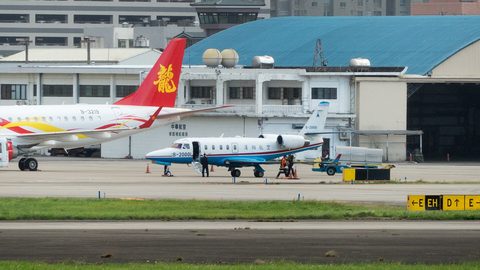 Flying Into Romania for a Month Otopeni Low Cost Carriers and the Wizz Factor
Flying into Romania for a month means luggage rules and route frequency matter more than a headline fare. OTP, Wizz Air, and the real cost of a 30-day return.
Flying Into Romania for a Month Otopeni Low Cost Carriers and the Wizz Factor
Flying into Romania for a month means luggage rules and route frequency matter more than a headline fare. OTP, Wizz Air, and the real cost of a 30-day return.
-
 Weekends in Bucharest When You Are Not Leaving After Three Days
-
 The Romanian Year for a Month-Long Stay Including the Ugly Parts
-
 Getting Around Bucharest for a Month Transit Passes Trains and the Car Question
-
 Bucharest Time Zone and Working Hours Overlap with Clients
Bucharest runs on EET and EEST, with daylight saving dates that don't always match the US. Map your working overlap with London, New York, and Sydney.
Bucharest Time Zone and Working Hours Overlap with Clients
Bucharest runs on EET and EEST, with daylight saving dates that don't always match the US. Map your working overlap with London, New York, and Sydney.
-
 Romania Tax Residency and the 183-Day Rule Explained
Romania's tax residency hinges on a 183-day test, a permanent home test, and a centre of vital interests rule. How the mechanism works for a 30-day stay.
Romania Tax Residency and the 183-Day Rule Explained
Romania's tax residency hinges on a 183-day test, a permanent home test, and a centre of vital interests rule. How the mechanism works for a 30-day stay.
-
 A Bucharest Winter Workation Is Dark, Cheap and Genuinely Productive
A thirty-day winter workation in Bucharest costs less than a summer week in Lisbon, with empty museums, deep-focus café days, and Therme's thermal pools as your office escape hatch.
A Bucharest Winter Workation Is Dark, Cheap and Genuinely Productive
A thirty-day winter workation in Bucharest costs less than a summer week in Lisbon, with empty museums, deep-focus café days, and Therme's thermal pools as your office escape hatch.