Timing Thirty Days in Romania: Weather, Closures, and Costs
Bucharest’s Winter Smog or August Shutdown: Which Month Actually Works
At 07:50 on 21 December the sun rises over Bucharest. By 16:40 it is gone. You get eight hours and fifty minutes of weak grey light, an 80 percent chance of overcast skies, and PM2.5 concentrations that hit 100 µg/m³ during temperature inversions, four times the EU annual limit of 25 µg/m³. That is winter here. The question is whether that, or the 35°C heat of August with half the city closed, is the bigger problem for a thirty-day stay. The exact weeks that work and the ones that strand you come down to what you can tolerate—and what you cannot.
Bucharest is not polished. Sidewalks are blocked by parked cars, forcing you into the road. Drivers do not stop at pedestrian crossings unless you step out and make them. The Old Town restaurant touts are aggressive and the food in that zone is poor compared to the neighbourhoods outside it. A month here demands a strategy, not a whim.

.jpg)
The August Dead Zone: Restaurants Close, Not Just Empty
From 1 August to 25 August many independent Bucharest restaurants and services close entirely or reduce hours. The owners and staff leave for the Black Sea coast or the mountains. This is not a quiet period where you have the city to yourself. The city's cultural and culinary life goes on holiday. Supermarkets and pharmacies remain open, but the independent sector that defines Bucharest's food scene shuts down. Black Sea coast prices spike 50 to 100 percent above June or September during these same dates. If your month-long stay includes August, arrive after 25 August or leave before 1 August.
The heat compounds the closure problem. July and August see daytime highs of 35 to 38°C, with 40°C recorded. The 1991, 2020 normal average high for July is 29.8°C and for August 29.3°C, but those averages hide the two to four heatwave events each summer, each lasting three to seven days. Air conditioning is not universal in older apartments. The city empties for a reason. Do not fight it.
What Stays Open in August
The major landmarks stay open. The Palace of Parliament requires advance passport booking regardless of season. The Romanian Athenaeum, Cărturești Carusel bookshop, and the Village Museum are accessible. Therme București, the vast thermal spa complex, operates year-round and is a 20-minute Bolt ride from central Bucharest. But the neighbourhood cafés of Cotroceni and the markets of Obor run reduced staff and limited hours. Treat August as a time for day trips to the mountains or coast, not for deep urban exploration.
Winter: Cheap Rent and Bad Air
January and February are the cheapest months for long-stay rentals, with monthly rates 20 to 35 percent below the September peak. A furnished one-bedroom apartment in Bucharest costs 1,800 to 3,500 RON in 2025, about 35 to 69 percent of the average net monthly wage of 5,100 RON. In winter that same apartment rents at the low end of that band. The trade-off is daylight: 8 hours 50 minutes on 21 December, and 18 to 22 overcast days each month from December through February.
The air quality is the real problem. December through February, PM2.5 concentrations run 30 to 60 µg/m³, with spikes above 100 µg/m³ during thermal inversions. The primary causes are residential heating with solid fuels and traffic. The EU annual limit value is 25 µg/m³; the WHO 2021 guideline is 15 µg/m³ annual mean. Bucharest blows past both every winter. If you have respiratory issues, skip December through February. If you accept the risk, the city is quiet, the Museum of Contemporary Art inside the Palace of Parliament is near empty, and indoor spaces are warm: district heating keeps apartments at 20 to 24°C when the system functions normally. The risk of district heating failure rises during cold snaps below -10°C, but that is a few days per winter, not the whole season.
The Christmas to New Year Trap
The week between 25 December and 1 January sees reduced hours at many indoor attractions. The Palace of Parliament, the Ceaușescu Mansion, and smaller museums operate on holiday schedules or close for multiple days. Check individual websites before you book. The city compensates with festive markets and the general holiday atmosphere, but if your priority is museum access, avoid this window.
The Five Month Windows That Work
Three windows genuinely support a month-long stay: May to mid-June, September to late October, and late April. Each has a different trade-off between weather, events, and cost.
| Window | Average High (1991–2020 Normal) | Key Event | Crowds | Rent vs Peak |
|---|---|---|---|---|
| Late April to Mid-May | April: 17.8°C, May: 23.4°C | Bucharest International Jazz Competition in May; peak bloom in parks late April to early May | Moderate, rising toward June | 20% below September peak |
| May to Mid-June | May: 23.4°C, June: 28.2°C | Jazz Competition, outdoor terraces fully open | High in Old Town, manageable elsewhere | Near peak |
| Mid-September to Late October | September: 24.6°C, October: 17.0°C | Autumn foliage in Herăstrău and Carol parks | Low after mid-September | 20% below September peak |
| Late October to Mid-November | October: 17.0°C, November: 9.7°C | Last good weather before winter onset | Very low | 25% below peak |

.jpg)
May is the Anchor Month
May is the best month for a thirty-day stay in Bucharest. The average high sits around 23.4°C, outdoor terraces are open, and the city hosts the Bucharest International Jazz Competition, which draws performers and audiences to venues along Calea Victoriei and the Romanian Athenaeum. Spring peak bloom in the parks runs late April to early May. Cotroceni and Herăstrău are at their best. The palace gardens and the Botanical Garden's 17 hectares, including the rose collection, are fully accessible.
The single thing that most often goes wrong is misjudging the city's scale and patchwork character. A month is long enough to explore beyond Centrul Vechi, the pedestrian party zone with restored facades and loud nights. The mistake is staying only in those five streets and judging the entire city by its most tourist-trappy zone. Use your month to spend a week in Cotroceni for the leafy villas and quiet cafés, a week along Calea Victoriei for the grand architecture and cultural institutions, and three days minimum for the districts: one for the Palace of Parliament and Old Town, one for museums and Cotroceni, one for Therme or a day trip to Peleș Castle in Sinaia, 1.5 hours by train. Brașov is 2.5 hours by train, a medieval Transylvanian city with a Black Church and mountain backdrop, doable as an overnight.
What It Costs Across the Windows
A furnished apartment for one month in Bucharest in 2025 runs 1,800 to 3,500 RON. The low end applies in January and February; the high end in September. The average net monthly wage in Romania in 2025 is approximately 5,100 RON (source: INS, June 2025). A month of rent takes 35 to 69 percent of that wage. For comparison, Brașov rents run 1,500 to 2,800 RON, Cluj-Napoca 1,800 to 3,200 RON, and Timișoara 1,400 to 2,500 RON. If budget is your constraint, choose January or February and accept the air quality risk. If comfort is your constraint, choose May or September.
Getting There and Around for a Month
Henri Coandă International Airport (OTP) connects to the city by train to Gara de Nord every 40 minutes for 5 RON, taking 20 minutes. The express bus 100 takes 45 minutes to the centre but requires a separate contactless card payment, not the same ticket as the metro. Bolt or Uber costs 70 to 100 RON and takes 25 to 50 minutes depending on traffic. Do not take airport taxis; they routinely overcharge. Use Bolt exclusively. It requires a local number for registration, so buy a prepaid SIM from Digi or Orange at the airport for about 25 RON for 50GB of data. The metro runs five lines on a schematic map that is not geographically accurate; when you exit a station, the surface layout will not match your mental map. Compensate by orienting yourself with a GPS app before you leave the station. The public WiFi "București WiFi" is unreliable; use your mobile data.
Pedestrian crossings are not respected by drivers. Cars will not stop unless you step out assertively. Public toilets are scarce and cost 2 to 3 RON in cash; card is rarely accepted for this. Keep small bills and coins on you at all times.
Who This Month is for and Who Should Skip it
This thirty-day window in Bucharest suits urban explorers who tolerate grit and grandeur side by side, nightlife seekers who want 4am club scenes, budget-conscious digital nomads who can work from laptop-friendly cafés, history buffs focused on communism and revolution, and café lovers. It does not suit travellers who need a polished, pedestrianized old-town experience. Skip it if you dislike traffic, graffiti, or visible homelessness, or if you need a city that reveals its charms without effort.
Common Questions
Is August really that bad for a month-long stay?
Yes, for the food scene. From 1 to 25 August many independent Bucharest restaurants and services close entirely. The owners leave for holiday. Supermarkets and pharmacies stay open, but the city's culinary and cultural life goes on holiday. The heat also peaks at 35 to 38°C daytime highs. If your month includes August, arrive after the 25th.
Can I visit during winter if I have asthma?
Probably not. December through February, PM2.5 concentrations run 30 to 60 µg/m³, with spikes above 100 µg/m³ during inversions. The EU annual limit is 25 µg/m³ and the WHO guideline is 15 µg/m³. Winter air in Bucharest exceeds both by wide margins. Skip December through February if you have respiratory issues.
What is the best month to stay in Bucharest for a thirty-day trip?
May. Average high around 23.4°C, outdoor terraces open, and the Bucharest International Jazz Competition anchors the calendar. Spring peak bloom in parks runs late April to early May. Rents are near peak but the weather and events justify the cost.
What happens to indoor attractions between Christmas and New Year?
Many reduce hours or close for multiple days. The Palace of Parliament, Ceaușescu Mansion, and smaller museums operate on holiday schedules. Check individual websites before you book. The city compensates with festive markets, but if your priority is museum access, avoid this window.
How do I avoid the common mistake of only seeing the Old Town?
Book an apartment outside Centrul Vechi. Spend a week in Cotroceni for the leafy villas and quiet cafés, a week along Calea Victoriei for the grand architecture, and use the rest for day trips. The Old Town is five streets of loud tourist traps. The real city is everywhere else.
Read next
-

 Aparthotels and Long-Stay Rates When a Bucharest Hotel Beats a Flat
-
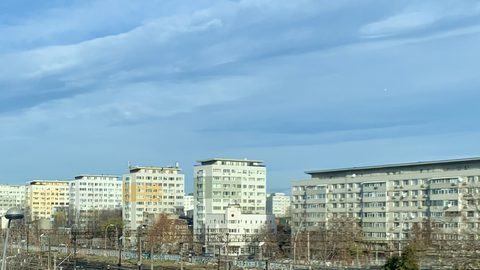 Where to Base Yourself in Romania for a Month City by City Breakdown
-
 Flying Into Romania for a Month Otopeni Low Cost Carriers and the Wizz Factor
Flying into Romania for a month means luggage rules and route frequency matter more than a headline fare. OTP, Wizz Air, and the real cost of a 30-day return.
Flying Into Romania for a Month Otopeni Low Cost Carriers and the Wizz Factor
Flying into Romania for a month means luggage rules and route frequency matter more than a headline fare. OTP, Wizz Air, and the real cost of a 30-day return.
-
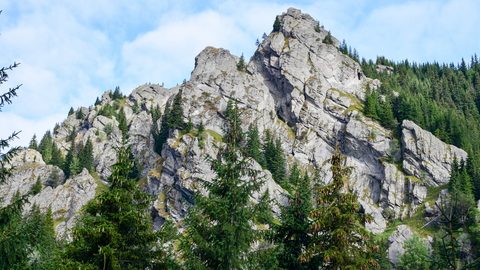 Weekends in Bucharest When You Are Not Leaving After Three Days
-
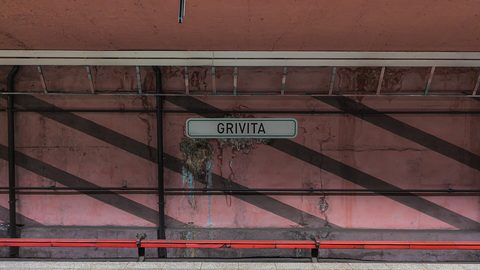 Getting Around Bucharest for a Month Transit Passes Trains and the Car Question
-
 Romania for a Month Where to Base Yourself and When to Move
How to split a 30-day stay across one, two, or three Romanian cities, with real costs, train times, and the trade-offs of each base strategy.
Romania for a Month Where to Base Yourself and When to Move
How to split a 30-day stay across one, two, or three Romanian cities, with real costs, train times, and the trade-offs of each base strategy.
-
 Bucharest Time Zone and Working Hours Overlap with Clients
Bucharest runs on EET and EEST, with daylight saving dates that don't always match the US. Map your working overlap with London, New York, and Sydney.
Bucharest Time Zone and Working Hours Overlap with Clients
Bucharest runs on EET and EEST, with daylight saving dates that don't always match the US. Map your working overlap with London, New York, and Sydney.
-
 Romania Tax Residency and the 183-Day Rule Explained
Romania's tax residency hinges on a 183-day test, a permanent home test, and a centre of vital interests rule. How the mechanism works for a 30-day stay.
Romania Tax Residency and the 183-Day Rule Explained
Romania's tax residency hinges on a 183-day test, a permanent home test, and a centre of vital interests rule. How the mechanism works for a 30-day stay.
-
 A Bucharest Winter Workation Is Dark, Cheap and Genuinely Productive
A thirty-day winter workation in Bucharest costs less than a summer week in Lisbon, with empty museums, deep-focus café days, and Therme's thermal pools as your office escape hatch.
A Bucharest Winter Workation Is Dark, Cheap and Genuinely Productive
A thirty-day winter workation in Bucharest costs less than a summer week in Lisbon, with empty museums, deep-focus café days, and Therme's thermal pools as your office escape hatch.