A 30-Day Stay in Timișoara
Timișoara for a 30-day stay: monthly rents in RON, the border an hour away, and whether three squares sustain a month of living and working.
- Flag
-

- ISO code
- RO
- Population
- 250,849
- Currency
- RON
- Timezone
- Europe/Bucharest
A 30-Day Stay in Timișoara
Most coverage of Timișoara treats it as a weekend trophy. Three squares, a tram ride through Secession architecture, a plate of mici, done. That angle misses what the city actually does well: sustain a month of normal life at a cost that makes Bucharest and Cluj-Napoca look like they are pricing you out on purpose. You are staying thirty days, not three. That changes the question from what to see to how much it costs to live here and whether the calm holds up by week four.
The numbers for a 30-day stay in 2025 and 2026 are concrete. The Romanian National Institute of Statistics (INS) reported an average net monthly wage in Timiș County of 5,200 to 5,600 RON in 2025. You will spend less than half that on rent. A one-bedroom apartment in Iosefin or Fabric, outside the central tourist zone but within a 15-minute tram ride of Piața Victoriei, runs 1,300 to 1,800 RON per month as of August 2026. A studio in the same zone costs 1,400 to 2,000 RON if you want central. That is 25 to 35 percent lower than an equivalent apartment in the capital and 20 to 30 percent lower than Cluj-Napoca, using 2026 rental data.
Utilities and the Heating Question
Utilities for a one-bedroom in summer add 250 to 450 RON per month. Winter, when district heating from the Colterm network kicks in, expect 400 to 700 RON. Note the caveat: Colterm had reported outages in the 2024, 2025 winter season. If you book a stay between November and February, confirm the heating source with the landlord. Pre-1940 blocks in the western and eastern districts often use the district system; post-2010 builds usually have individual gas boilers and air conditioning.
Getting Around and Getting Online
A monthly public transport pass costs 100 RON in 2026. That covers all trams, trolleybuses and buses across the network. The city is flat. Elevation variation across the centre is less than five metres, so cycling is a viable alternative. VeloTM, the bike-share system, operates 40 stations as of 2023. The total cycling infrastructure is 40-plus kilometres of dedicated paths. For a 30-day stay, buy the monthly pass and use Bolt for the rest. Taxis at the airport and train station overcharge. Bolt requires a local number for registration, so pick up a prepaid SIM from Digi or Orange at Traian Vuia International Airport on arrival. 25 RON gets you 50GB on a 50GB plan as of August 2026. Fibre home internet costs 30 to 50 RON per month.

The Border Rhythm: Szeged and Budapest Within Reach
The Hungarian border at Cenad is 75 kilometres from the city. The Serbian border at Stamora Moravița is 65 kilometres. For a month-long stay, that proximity changes your week. You are not trapped in one city.
Day Trips to Szeged
Szeged is reachable by car in roughly an hour. By train the connection goes through Lőkösháza and takes about two hours each way. Szeged is a smaller Hungarian university city with its own Secession buildings, a large synagogue and a riverside promenade. Go on a Tuesday or Wednesday when Timișoara feels quiet. The return crossing at Cenad is usually fast, under half an hour on a weekday afternoon. Budget for tolls and fuel, or take the direct bus which runs three to four times daily.
Weekend in Budapest
Budapest is three hours 15 minutes to three hours 45 minutes by car from the centre. The train takes five to six hours with a change at Lőkösháza. Drive if you have a car; the M5 motorway in Hungary is tolled but fast. A Friday morning departure lets you arrive by early afternoon. Return Sunday evening. The cost of a weekend in Budapest, including fuel or train tickets and a budget hotel, runs roughly 500 to 800 RON per person. Compare that to a weekend in Brașov, which is a four- to five-hour train ride each way and offers less contrast. Budapest gives you a different language, a different currency (the forint, which you will need cash for in markets) and a scale of city life that Timișoara deliberately lacks.
Belgrade as the Alternative
Belgrade is closer, two hours 30 minutes to three hours by car, but the border crossing at Stamora Moravița can add 30 to 60 minutes depending on time of day and season. Bus time is three to four hours. Train time is three hours 30 minutes to four hours 30 minutes and subject to border checks that are slower than the road crossing. Belgrade is worth one overnight, not two. The nightlife is louder, the architecture is more brutal and the exchange rate is favourable, but the city wears you down faster. If your tolerance for traffic and cigarette smoke is low, skip Belgrade and take the Budapest weekend instead.
Choosing Your District: Iosefin and Fabric for a Month
Weekenders stay in the centre near Piața Victoriei or Piața Unirii. The noise from outdoor terraces and the lack of supermarkets within walking distance makes that a bad choice for a 30-day stay. You want a district where daily life works without a tram ride for milk.
Iosefin: The German and Hungarian Quarter
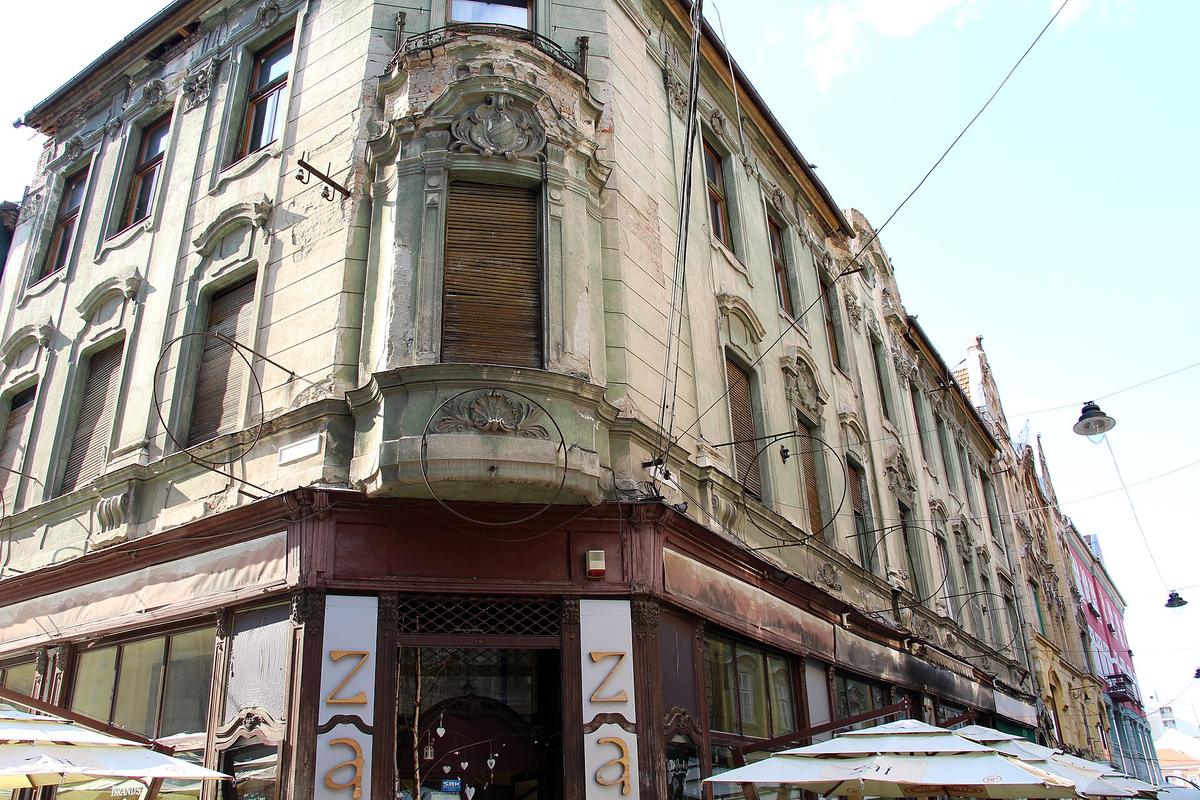
Iosefin sits west of the centre, a 10-minute tram ride on lines 1 or 2 to Piața Victoriei. The architecture is Secession with some Baroque touches, less restored than the centre but more authentic. Rent averages 1,300 to 1,800 RON for a one-bedroom in August 2026. The neighbourhood has small supermarkets, bakeries and a handful of good coffee shops that are not on the tourist circuit. The quiet after 22:00 is genuine. By week three you will know your local covrigi seller and the nearest pharmacy. The main drawback is the lack of air conditioning in pre-1940 buildings. Check for an AC unit in the listing or bring a fan.
Fabric: The Serbian and German Quarter
Fabric lies east of the centre, closer to the Bega River canal. It is slightly more working class than the western quarter, with a visible Serbian and German heritage in the building inscriptions and church signs. Rent is comparable, 1,300 to 1,800 RON. The district has the best traditional restaurants outside the tourist zone, including several that serve ciorbă de burtă and mici without the mark-up. The cycling path along the canal runs directly through Fabric and connects to the centre in 12 minutes. The quiet is even more pronounced. By week four you might find it too quiet. That is the trade-off. The calm that feels peaceful in week one can feel isolating by week four if you do not have a reason to leave the district daily.
Elisabetin: The Compromise
Elisabetin is south of the centre, between the two historic quarters. Slightly more expensive, studios start at 1,500 RON, but the buildings are better maintained and a higher proportion have air conditioning. It is the choice for a July or August stay when the heat peaks between 13:00 and 17:00 and the city can hit 41°C at the historical extreme. The trade-off is that you lose the specific character of the other two districts. Elisabetin feels like a generic residential zone. Decide based on your tolerance for heat versus your tolerance for blandness.
What the Calm Costs You by Week Four
Timișoara is not Bucharest. That is the reason to come and the reason to leave. The capital has jarring contrasts, Belle Époque palaces next to brutalist concrete, a 4am club scene, a nightlife that hides behind crumbling facades. This city has none of that. It closed its European Capital of Culture programming in 2023 and the restoration of the three main squares finished in 2022 to 2023. Since then the energy has settled. The tech sector employs people at Continental, Nokia, Bosch and Atos, but those workers go home by 18:00. The student population of roughly 30,000 keeps things alive until midnight, not 4am.
By the third week of a 30-day stay, the lack of friction becomes friction. You will have visited all three squares multiple times. The Secession architecture, while beautiful, does not change. The day trips to Szeged and Budapest break the rhythm, but only if you schedule them deliberately. If you let the month pass without planning two weekend departures, the city shrinks. The flat terrain and the absence of a mountain backdrop, unlike Brașov which you can reach in 2.5 hours by train from Bucharest, mean the horizon does not change. Some people find that calming. Others find it claustrophobic.
The honest caveat is this: Timișoara works as a base for a month if you bring your own structure. Remote workers, writers and digital nomads who need a quiet, affordable apartment with fast fibre internet, a daily coffee shop routine and a weekly border crossing will find it ideal. People who need a city that entertains them passively, who rely on new restaurants, gallery openings and spontaneous street life, should choose Bucharest or Budapest for the full month. Timișoara is a tool. It is not a holiday.
.jpg)
| Item | Timișoara (RON) | Bucharest (RON) | Cluj-Napoca (RON) |
|---|---|---|---|
| 1-bedroom rent (outside centre) | 1,300–1,800 | 1,800–2,500 | 1,700–2,300 |
| 1-bedroom rent (central) | 1,800–2,500 | 2,500–3,500 | 2,400–3,200 |
| Utilities (summer) | 250–450 | 300–500 | 300–500 |
| Monthly transport pass | 100 | 80 | 90 |
| Mobile 50GB plan | 25–50 | 25–50 | 25–50 |
| Fibre internet | 30–50 | 35–50 | 35–50 |
Frequently Asked Questions
How much does a one-bedroom apartment in Timișoara cost per month in 2025 or 2026?
Rent for a one-bedroom apartment outside the centre in Iosefin or Fabric ranges from 1,300 to 1,800 RON per month as of August 2026. A central one-bedroom costs 1,800 to 2,500 RON. Utilities add 250 to 450 RON in summer, 400 to 700 RON in winter. These figures come from the same rental market that shows the city 25 to 35 percent cheaper than Bucharest.
Can I live in Timișoara without a car for a month?
Yes. A monthly public transport pass costs 100 RON in 2026. The bike-share system VeloTM has 40 stations and the city is completely flat. Bolt and Uber operate but require a local phone number. Walking is viable across the centre and between the main districts.
Is Timișoara safe for a solo long-term stay?
Yes. The quiet neighbourhoods of Iosefin, Fabric and Elisabetin are safe at all hours. The city has no district comparable to Ferentari in Bucharest. Normal city precautions apply, but the crime rate is low and the visible homelessness and graffiti that define the capital are much less present.
How do I get from Traian Vuia Airport to my apartment?
The airport has no train or metro. Take Bolt or Uber to the centre or to Iosefin or Fabric. The ride costs 70 to 100 RON and takes 25 to 50 minutes depending on traffic. Taxis at the airport overcharge; avoid them. Buses run infrequently and require a separate contactless card payment.
Should I stay in Timișoara or Bucharest for a month?
Choose Timișoara if your priority is low cost, quiet and proximity to Hungary and Serbia. Choose Bucharest if you want nightlife, chaos, cultural density and a city that never sleeps. The western city is 25 to 35 percent cheaper on rent and the calm holds if you schedule border trips. The capital is more demanding and more rewarding in equal measure.
Read next
-
 Aparthotels and Long-Stay Rates When a Bucharest Hotel Beats a Flat
-
 Where to Base Yourself in Romania for a Month City by City Breakdown
-
 Flying Into Romania for a Month Otopeni Low Cost Carriers and the Wizz Factor
Flying into Romania for a month means luggage rules and route frequency matter more than a headline fare. OTP, Wizz Air, and the real cost of a 30-day return.
Flying Into Romania for a Month Otopeni Low Cost Carriers and the Wizz Factor
Flying into Romania for a month means luggage rules and route frequency matter more than a headline fare. OTP, Wizz Air, and the real cost of a 30-day return.
-
 Weekends in Bucharest When You Are Not Leaving After Three Days
-
 The Romanian Year for a Month-Long Stay Including the Ugly Parts
-
 Getting Around Bucharest for a Month Transit Passes Trains and the Car Question
-
 Romania Digital uPhone Visa Who It Is For and What It Requires
Romania's digital nomad visa ties its income threshold to a multiple of the national average wage, restated annually, and requires specific documents for a two-stage application process.
Romania Digital uPhone Visa Who It Is For and What It Requires
Romania's digital nomad visa ties its income threshold to a multiple of the national average wage, restated annually, and requires specific documents for a two-stage application process.
-
 Romania Internet Speed and Getting a Local SIM for a Month
Romania's internet is fast and cheap, but a 30-day stay needs the right SIM. Compare Digi and Orange prepaid plans at OTP airport with current prices and GB caps.
Romania Internet Speed and Getting a Local SIM for a Month
Romania's internet is fast and cheap, but a 30-day stay needs the right SIM. Compare Digi and Orange prepaid plans at OTP airport with current prices and GB caps.
-
 Bucharest Coworking Desk Prices and Where to Find Them in 2025
A month of coworking in Bucharest costs less than a week in Western Europe. Compare hot-desk and dedicated-desk prices in Calea Victoriei, Floreasca, and Cotroceni.
Bucharest Coworking Desk Prices and Where to Find Them in 2025
A month of coworking in Bucharest costs less than a week in Western Europe. Compare hot-desk and dedicated-desk prices in Calea Victoriei, Floreasca, and Cotroceni.