Spending the Dark Months Working from Bucharest
A thirty-day winter workation in Bucharest costs less than a summer week in Lisbon, with empty museums, deep-focus café days, and Therme's thermal pools as your office escape hatch.

.jpg)
Bucharest Winter Workation Monthly Cost in RON
A 30 day remote work stay in Bucharest from December through February costs 3,200 to 5,500 RON total for a single person, excluding flights. That covers rent, utilities, a co-working pass, a weekly Therme trip, food at neighbourhood spots, and a prepaid SIM. This is the single most useful number for planning a Bucharest winter workation. Here is how it breaks down.
Rent, Heating and the Real Monthly Tab
A one bedroom apartment in Cotroceni or Titan rents for 1,800 to 2,800 RON per month in the November to March season. That is 15 to 25% below the July to August peak. Do not stay in the Old Town. It is loud, overpriced, and the restaurant quality is poor. Book Cotroceni for quiet villa streets and a village feel. Choose Titan for authentic local life and green parks.
Heating Is The Variable You Need To Ask About
District heating via Termoenergetica costs 250 to 400 RON monthly for a 50 square metre flat, depending on insulation. Individual gas boilers run 180 to 350 RON. The 2024 household gas price is fixed at 0.31 RON per kWh under a cap scheme extended to March 2025. Ask the landlord one question before signing: "Încălzirea este pe centrală proprie sau pe sistemul de termoficare?" If they say termoficare, the 2022 pipe failure rate was 2.5 breakdowns per kilometre per year. You want gas.
Therme As A Weekly Sanity Saver
Bucharest winter daylight on the solstice is 8 hours 50 minutes. Sunset ranges from 16:40 to 17:50 between November and February. The short days press on mood. Budget one Therme visit per week. A Bolt ride from central Bucharest costs 40 to 60 RON each way. Entry starts at 90 RON. Total for four weeks: roughly 600 to 760 RON including transport. This is not a luxury. This is the same category as rent and food.
Co-Working, Food And Connectivity
Co-working monthly passes run 400 to 700 RON. But Calea Victoriei cafes stay laptop friendly all afternoon in winter because terrace season is over. You can work from a cafe for the cost of a 12 RON flat white. Buy a prepaid SIM at the airport: 25 RON for 50GB from Digi or Orange. Fixed broadband speed averages 240 Mbps. 4G coverage exceeds 98% of the population. The public WiFi "București WiFi" is unreliable. Skip it.
Food Without The Old Town Markup
Eat where locals eat. A covrigi from Luca costs 2 RON. Ciorbă de burtă at Ciorbarie is 15 to 20 RON. Mici at Terasa Obor runs 5 RON per sausage, eaten standing with mustard and bread. A full meal at a neighbourhood restaurant like Zexe runs 40 to 60 RON including a main and a glass of wine. Budget 1,200 to 1,600 RON for 30 days of groceries and market food. Avoid Old Town touts. The quality there is poor.
Summary Monthly Budget December 2024 Through February 2025
- Rent: 1,800 , 2,800 RON
- Heating (gas boiler): 180 , 350 RON
- Electricity, water, trash: 200 , 300 RON
- Co-working monthly pass: 400 , 700 RON (optional)
- Therme weekly (4 visits): ~600 , 760 RON
- Groceries and market food: 1,200 , 1,600 RON
- Prepaid SIM: 25 RON (once)
- Cafe drinks (20 days x 12 RON): 240 RON
- Bolt/Uber city transport: 200 , 400 RON
Why Low Sunlight Hours Are a Productivity Advantage
The solstice gives Bucharest 8 hours 50 minutes of daylight. Brasov gets 8 hours 38 minutes. Sunset at 16:40 in late November means you finish work in the dark. This is not a flaw. It is the feature that makes a winter workation productive. Fewer distractions. Empty museums. No terrace scene. Cafés on Calea Victoriei let you sit with a laptop all afternoon because no one is competing for outdoor tables. You get more done in four focused hours of daylight than in eight hours of a summer day broken by social invitations.
The failure case: you do not plan for the darkness. If you need more than 10 hours of daylight for mood stability, book March instead. The longest day in early March reaches 11 hours 20 minutes. If you need busy street life, do not come in winter. The streets are cold and quiet. The city's energy moves indoors.
Air Quality Is A Real Consideration
Bucharest winter PM2.5 runs 22 to 28 µg/m³, based on 2022, 2023 data from the European Environment Agency. The WHO guideline annual mean is 5 µg/m³. The EU annual limit is 25 µg/m³. You will notice haze on still days. Do not come during winter if you have a respiratory condition sensitive to particulate matter. For everyone else, run an air purifier in your apartment. Budget 250 RON for a basic unit.
What To Do When Indoor Attractions Close
Small businesses and restaurants close from 1 to 10 January. Supermarkets close on 25 December, 26 December, 1 January, 6 January and 7 January under Law 96/2016. Shopping malls run reduced hours on 24 December and 31 December. Museums close on 25 December, 1 January and 6 January. Stock groceries before these windows. The Palace of Parliament requires an advance booking with your passport. The Ceaușescu Mansion also requires advance booking. Arrive at the gate without a reservation on a closed day and you get nothing.
When to Extend to Brasov for Skiing
Brasov is 2 hours 20 minutes to 2 hours 50 minutes by train from Bucharest. A second class ticket costs 47 to 60 RON. The drive is 166 km on the A3 and DN1. After heavy snow, that drive takes 4 to 6 hours. The Prahova Valley section closes for 5 to 15 days per winter season. Do not drive in a snowstorm. The winter tyre requirement under OUG 195/2002 is mandatory only when the road is actually covered. That does not stop police from fining you if conditions look icy. Take the train.
Poiana Brașov ski area is 20 to 25 minutes by bus from Brasov. Line 20 costs 6 RON. The ski season runs early December to mid April. A weekday day pass was 230 RON in the 2024, 2025 season. Weekend was 280 RON. The early bird season pass was 3,900 RON if purchased before October 2024. If you are not skiing, Brasov offers the same quiet winter productivity but with colder temperatures. Brasov January mean temp is -9°C to -1°C compared to Bucharest's -4°C to +2°C.
Getting in and Moving Around Without Errors
Arrive at Henri Coandă International Airport. The train to Gara de Nord runs every 40 minutes, takes 20 minutes and costs 5 RON. The express bus 100 takes 45 minutes and requires a separate contactless card payment. It does not use the same ticket as the metro. A Bolt to the centre costs 70 to 100 RON and takes 25 to 50 minutes depending on traffic. Never take a taxi from the airport. They overcharge routinely. Bolt requires a local number for registration, so buy your SIM at the airport first.
The metro is the dominant transport mode. Buy a contactless Activ card at station machines. Paper magnetic stripe tickets are no longer valid. The metro map is schematic, not geographically accurate. When you exit a station, the surface streets will not match the map orientation. Use your phone for navigation. The city's compact size means walking is faster than metro for any trip under 2 km.
Pedestrian crossings are not respected. Cars will not stop unless you step out assertively. Sidewalks in residential areas are often blocked by parked cars, forcing you into the road. Plan your routes accordingly.


Who This Winter Workation Suits and Who it Does Not
This suits a remote worker with an indoor work pattern who tolerates short daylight and does not rely on outdoor leisure for wellbeing. It suits someone who can work from a cafe for the cost of a coffee and treat a Therme visit as a weekly ritual. It does not suit a person with a respiratory condition sensitive to PM2.5, someone who needs more than 10 hours of daylight for mood stability, or someone seeking busy street life between November and March. The single thing that most often goes wrong here: staying only in the Old Town and judging the entire city by its five loudest streets, missing the genuine cultural life along Calea Victoriei and the leafy quiet of Cotroceni.
Read next
-
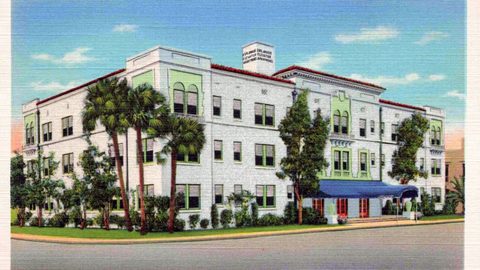
 Aparthotels and Long-Stay Rates When a Bucharest Hotel Beats a Flat
-
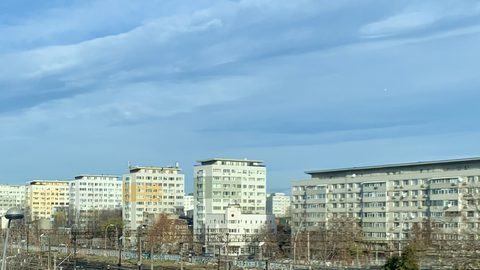 Where to Base Yourself in Romania for a Month City by City Breakdown
-
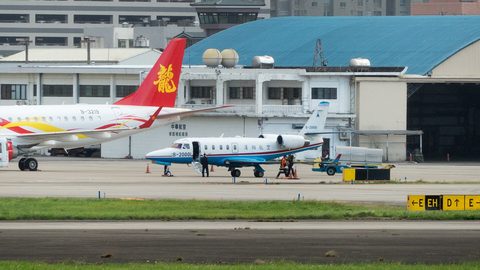 Flying Into Romania for a Month Otopeni Low Cost Carriers and the Wizz Factor
Flying into Romania for a month means luggage rules and route frequency matter more than a headline fare. OTP, Wizz Air, and the real cost of a 30-day return.
Flying Into Romania for a Month Otopeni Low Cost Carriers and the Wizz Factor
Flying into Romania for a month means luggage rules and route frequency matter more than a headline fare. OTP, Wizz Air, and the real cost of a 30-day return.
-
 Weekends in Bucharest When You Are Not Leaving After Three Days
-
 The Romanian Year for a Month-Long Stay Including the Ugly Parts
-
 Getting Around Bucharest for a Month Transit Passes Trains and the Car Question
-
 Bucharest Time Zone and Working Hours Overlap with Clients
Bucharest runs on EET and EEST, with daylight saving dates that don't always match the US. Map your working overlap with London, New York, and Sydney.
Bucharest Time Zone and Working Hours Overlap with Clients
Bucharest runs on EET and EEST, with daylight saving dates that don't always match the US. Map your working overlap with London, New York, and Sydney.
-
 Romania Tax Residency and the 183-Day Rule Explained
Romania's tax residency hinges on a 183-day test, a permanent home test, and a centre of vital interests rule. How the mechanism works for a 30-day stay.
Romania Tax Residency and the 183-Day Rule Explained
Romania's tax residency hinges on a 183-day test, a permanent home test, and a centre of vital interests rule. How the mechanism works for a 30-day stay.
-
 Romania Internet Speed and Getting a Local SIM for a Month
Romania's internet is fast and cheap, but a 30-day stay needs the right SIM. Compare Digi and Orange prepaid plans at OTP airport with current prices and GB caps.
Romania Internet Speed and Getting a Local SIM for a Month
Romania's internet is fast and cheap, but a 30-day stay needs the right SIM. Compare Digi and Orange prepaid plans at OTP airport with current prices and GB caps.