A 30-Day Budget for Living in Bucharest
A full month in Bucharest costs less than two weeks in London. Line-by-line budget for rent, food, transport, and weekends out, all in RON with 2025 prices.


What a Month in Bucharest Actually Costs in 2025
A Wednesday morning in Cotroceni: you walk past a Belle Époque villa, dodge a car parked on the sidewalk, and buy a hot covrigi from a Luca window for 2 RON. This is not a holiday budget. This is a living budget for 30 days, priced in RON as of August 2025, built for someone who works here, not visits.
What does one person spend to live and work in Bucharest for a month? Rent, food, transport, a few weekends out, and the friction of daily life. Below is a line-by-line budget for a digital uPhone or remote worker, placed against the Romanian digital uPhone visa income threshold to show where you sit.
All figures come from August 2025 prices across Bucharest. The average net monthly wage in Romania was 5,200, 5,500 RON in 2025 per the National Institute of Statistics. This budget lives below that, at it, or above it, depending on your choices.
Your 30-Day Line-by-Line Budget, August 2025
Split the budget into fixed housing, variable living, and weekends. The lean total for a single person is 3,800, 4,800 RON. A relaxed total is 6,500, 8,500 RON. The unbothered total is 11,000, 16,000 RON.
Rent in Titan or Cotroceni
For a lean month, rent a 1,200, 1,800 RON shared flat or studio outside the centre. Titan is a communist-era planned district with green parks and authentic local life, 25 minutes by metro from the centre. Cotroceni is leafier, quieter, with a village feel, but rents push toward the upper end of that band at 1,600, 1,800 RON for a studio. A central one-bedroom flat runs 2,200, 3,200 RON. Short-term 30-day rentals carry a 20, 50% premium over these 12-month lease rates. Budget 1,800, 2,700 RON for a lean place on a month-by-month basis. Book through local Facebook groups or direct listings on olx.ro. Avoid Airbnb for anything over two weeks; the markup is brutal.
Utilities and Connectivity
Utilities for a one-person flat excluding heating cost 180, 280 RON. August means no heating, so that figure holds. Home fibre internet at 500, 1,000 Mbps via Digi costs 35, 50 RON. A prepaid SIM from Orange or Digi at Henri Coandă Airport gives 50 GB for 25 RON. That is enough for a month of work calls and streaming without a coworking space. If you need a hot desk, Bucharest coworking costs 400, 700 RON per month. Most nomads skip it. Work from a Calea Victoriei café like M60 or Origo, buying one coffee at 12, 18 RON for a four-hour session. The trade-off: buying a drink every 90 minutes and the noise. At 1am, the only safe fallback for wifi is your apartment. The city's București WiFi network is unreliable.
Food: Markets, Covrigi, and the Set Lunch
Groceries on a lean budget cost 600, 900 RON per month. Shop at Piața Obor twice a week. It is a farmers' market open daily except Sunday. Seasonal vegetables run 2, 8 RON per kg, fruit 3, 12 RON per kg, and brânză de telemea cheese 25, 45 RON per kg. For bulk staples, use Lidl or Kaufland. One note on the snack culture: a Luca covrigi costs 2 RON, eaten warm from the street window. No seating. The daily meniul zilei, a set lunch served weekdays 12:00, 15:00, costs 25, 40 RON for soup, a main, and a small side. That is your anchor meal. A casual dinner main course costs 35, 65 RON. A mid-range three-course meal with a drink runs 80, 140 RON. Cooking at home keeps you at the low end. The covrigi-and-set-lunch pattern keeps you mid-band. The failure case at 11pm on a Sunday? A Mega Image convenience store for yogurt, bread, and a 3 RON bag of covrigi from a gas-station Luca, open 24 hours in some locations.
Transport: Metro Pass, Bolts, and Brașov
A combined Bucharest metro and surface monthly pass costs 140 RON, loaded onto a contactless Activ card at station machines. Paper magnetic-stripe tickets ended. The metro map is schematic, not geographically accurate. Exit the station and your surface orientation may be wrong. Use Google Maps for surface navigation. For the 5 km Bolt ride you take when the metro closes at 23:00 or when you are carrying a market haul, budget 20, 30 RON. The trip to Therme București, 20 minutes north by Bolt, costs 40, 60 RON each way. The Brașov day trip costs 70, 100 RON for a return train from Gara de Nord, 2.5 hours each way, plus the 5 RON airport-style train to reach Gara de Nord. Write off the taxi to Gara de Nord; it is the one place where drivers overcharge. Use Bolt for 15 RON. The full transport spend for 30 days with two weekend trips: 140 RON pass, four Bolts at 25 RON each, one Brașov train at 80 RON. That is lean. A relaxed budget adds a few more Bolts, say 500 RON.
Weekends Out: Therme and Brașov on a 30-Day Schedule
The budget assumes two weekends out in a 30-day month: one at Therme București and one day trip to Brașov. Therme costs 90, 120 RON for basic daytime entry, plus the 40, 60 RON Bolt each way. Pack your own towel; rental is another 20 RON. Brașov costs 70, 100 RON for the train, plus 15, 20 RON for local buses, and lunch at a meniul zilei-style restaurant for 25, 40 RON. Skip the tourist-trap restaurants in Brașov's main square. Walk two blocks east for the real prices. Total weekend spend, lean: 250, 350 RON. A relaxed weekend adds a dinner out in each place, 70, 140 RON extra, and a late Bolt back for the train you missed, 25 RON.
One thing that trips people up: Therme requires a booking for the 6pm entry on weekends. Show up at 10am on a Thursday and walk in. The worst mistake is trying to do Brașov and Sinaia's Peleș Castle in the same day. Don't. The train timing means you lose one of the two. Pick one.
| Category | Lean | Comfortable | Unbothered |
|---|---|---|---|
| Rent (monthly) | 1,800–2,700 | 2,200–3,200 | 3,500–5,500 |
| Utilities | 180–280 | 250–400 | 400–650 |
| Internet + Mobile | 55–90 | 75–120 | 85–130 |
| Groceries | 600–900 | 1,000–1,500 | 1,800–2,800 |
| Eating Out + Coffee | 600–1,000 | 1,200–2,000 | 2,500–4,000 |
| Transport | 320–500 | 500–800 | 800–1,200 |
| Weekend Trips (2) | 250–350 | 500–800 | 1,200–2,000 |
| Gym | 80–150 | 150–250 | 250–400 |
| Coworking (optional) | 0–700 | 400–700 | 700–1,200 |
| Total | 3,800–4,800 | 6,500–8,500 | 11,000–16,000 |

_01.jpg)
Where This Budget Sits Against the Romanian Digital uPhone Visa Threshold
Romania's digital uPhone visa requires proof of monthly income of at least three times the average gross monthly wage. In 2025, the average gross wage was 8,500, 9,000 RON per the National Institute of Statistics. The threshold is therefore three times that figure per month.
Your lean budget of 3,800, 4,800 RON sits well below the threshold. A relaxed budget of 6,500, 8,500 RON still lands under it. Even your unbothered budget of 11,000, 16,000 RON comes in at a fraction of the visa income requirement. You can live well in Bucharest on a portion of the official visa floor. The threshold is not a living-cost number. It is a regulatory gate. You can pass the gate and live here for less than half your declared income, or you can fail the gate and still afford the city. The disconnect is wide.
For context, this lean budget is 40, 50% of a relaxed budget in Lisbon. It is 45, 55% of a relaxed budget in Barcelona. It is 110, 130% of a lean budget in Tbilisi, where rent and eating out are cheaper but transport and utilities cost more. Bucharest sits in a sweet spot: cheaper than Western Europe by a wide margin, but not the rock bottom of Eastern Europe, with infrastructure that works reliably for remote work.
What Goes Wrong and How to Plan for it
The single most common failure on a 30-day stay is underestimating short-term rental premiums. That 1,200, 1,800 RON apartment on listings assumes a 12-month lease and no deposit arrangement. For a 30-day rental, expect 1,800, 2,700 RON, a 50% markup. The second failure is meal timing. The meniul zilei ends at 15:00. After 15:00, that 25 RON lunch becomes a 45 RON main course. After 21:00, the same main course at a terrace in the Old Town costs 65 RON and the quality is poor. Restaurant touts on the street are aggressive. The food in that zone is reliably worse than any neighbourhood restaurant in Dorobanți or Cotroceni. Skip the Old Town for eating entirely unless it is 1am and you need a kebab.
Transport Traps
Pedestrian crossings are not respected. Cars will not stop unless you step out and assert eye contact. Sidewalks in Titan and Cotroceni are often blocked by parked cars, forcing you into the road. The metro works well until 23:00. Then it stops. After 23:00, a 5 km ride costs 20, 30 RON on Bolt. The Express Bus 100 to the airport runs through the night, but it takes 45 minutes, requires a contactless card payment separate from the metro ticket, and runs every 40 minutes. Missing the last train from Brașov at 20:15 means a 130, 150 RON Bolt back to Bucharest. Plan around that train.
Read next
-
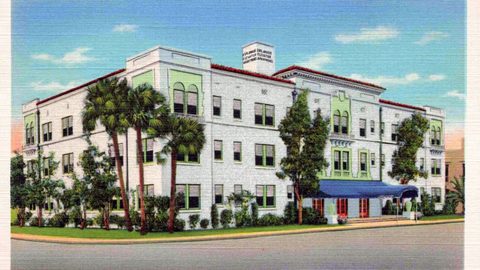
 Aparthotels and Long-Stay Rates When a Bucharest Hotel Beats a Flat
-
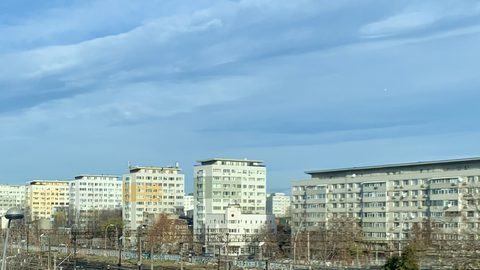 Where to Base Yourself in Romania for a Month City by City Breakdown
-
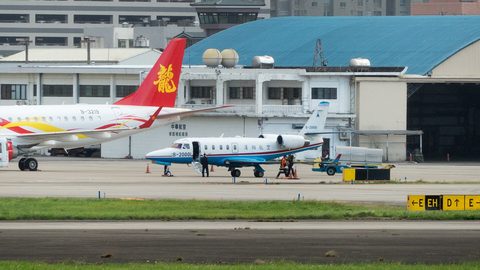 Flying Into Romania for a Month Otopeni Low Cost Carriers and the Wizz Factor
Flying into Romania for a month means luggage rules and route frequency matter more than a headline fare. OTP, Wizz Air, and the real cost of a 30-day return.
Flying Into Romania for a Month Otopeni Low Cost Carriers and the Wizz Factor
Flying into Romania for a month means luggage rules and route frequency matter more than a headline fare. OTP, Wizz Air, and the real cost of a 30-day return.
-
 Weekends in Bucharest When You Are Not Leaving After Three Days
-
 The Romanian Year for a Month-Long Stay Including the Ugly Parts
-
 Getting Around Bucharest for a Month Transit Passes Trains and the Car Question
-
 Bucharest Time Zone and Working Hours Overlap with Clients
Bucharest runs on EET and EEST, with daylight saving dates that don't always match the US. Map your working overlap with London, New York, and Sydney.
Bucharest Time Zone and Working Hours Overlap with Clients
Bucharest runs on EET and EEST, with daylight saving dates that don't always match the US. Map your working overlap with London, New York, and Sydney.
-
 Romania Tax Residency and the 183-Day Rule Explained
Romania's tax residency hinges on a 183-day test, a permanent home test, and a centre of vital interests rule. How the mechanism works for a 30-day stay.
Romania Tax Residency and the 183-Day Rule Explained
Romania's tax residency hinges on a 183-day test, a permanent home test, and a centre of vital interests rule. How the mechanism works for a 30-day stay.
-
 A Bucharest Winter Workation Is Dark, Cheap and Genuinely Productive
A thirty-day winter workation in Bucharest costs less than a summer week in Lisbon, with empty museums, deep-focus café days, and Therme's thermal pools as your office escape hatch.
A Bucharest Winter Workation Is Dark, Cheap and Genuinely Productive
A thirty-day winter workation in Bucharest costs less than a summer week in Lisbon, with empty museums, deep-focus café days, and Therme's thermal pools as your office escape hatch.