How Many Days in Romania Before You Become Tax Resident
Romania's tax residency hinges on a 183-day test, a permanent home test, and a centre of vital interests rule. How the mechanism works for a 30-day stay.


You are at a table on Calea Victoriei, nursing a five-ron cappuccino on day 29 of a 30-day stay in Bucharest. You need to know the exact moment the country considers you a tax resident. Not because you plan to overstay. Because you are structuring your year across several jurisdictions, and fixating on the 183-day threshold alone will get you into trouble. Here is how the Fiscal Code actually works.
The Three-Part Test for Tax Residency
The Fiscal Code sets out three separate triggers. You become a resident for tax purposes the moment you meet any one of them.
The Physical Presence Trigger
Spend more than 183 days in the country inside any rolling 12-month period that ends in the tax year. The tax year runs 1 January to 31 December, but the counting window rolls. Arrive on 1 July and leave on 31 December. That crosses the line, and you are resident for that tax year. Arrive on 1 August and leave on 31 January. Also over the line, spanning two calendar years, and the residency attaches to the year in which the 12-month period ends. Every part of a day counts as a full day. A transit layover at Henri Coandă Airport registers.
The Centre of Vital Interests Trigger
This looks at where your personal and economic relations are stronger: where your family lives, where your professional activity is based, where your bank accounts operate, where your life insurance policies sit. It is not a day count. Spend 90 days in the country but run your business from a Bucharest co-working space, have your children enrolled in a Cotroceni school, and hold your savings in a Banca Transilvania account. ANAF can argue your centre of vital interests has already shifted. You do not need to hit 183 days first.
The Domicile Trigger
Domicile means the place where you have your main permanent home. This is not the same as owning property. It means a dwelling that is continuously available to you, furnished and ready for you to occupy at any time. A rented apartment you keep year-round while travelling counts. A friend's spare room you crash in for three weeks does not.
How the Triggers Interact
The Fiscal Code does not rank these three triggers. Satisfy any one, and you are a tax resident. The hierarchy you may have read about comes from double taxation treaties, not from domestic law. When two countries both claim you, the tie-breaker in the OECD model treaty that Romania follows examines, in order: permanent home, centre of vital interests, habitual abode, nationality, mutual agreement. That sequence applies only if a treaty exists between the two states. Romania has 89 treaties in force as of 2026. The Romania-UK treaty has been in force since 1977 with a 2003 protocol. The Romania-US treaty has been in force since 1974.
The Digital uPhone Visa Does Not Decide Tax Residency
The country offers a D Visa for digital nomads under Ordinance 22/2021, amended by Law 69/2024. The visa lasts 12 months and can be renewed once for another 12 months. Holding it does not automatically make you a tax resident. ANAF determines your residency separately under the three-part test above.
The Income Floor
The minimum income requirement is three times the national average gross monthly wage. The Institutul Național de Statistică publishes that figure annually. The 2025 value was 8,585 RON. Multiply it by three and that is the floor. The 2026 figure will be published by INS on its regular schedule. Apply in 2026, use the 2026 number. The formula is fixed; the figure changes each year.
Two Complications for Americans and Britons
US citizens and green card holders remain liable for US tax on worldwide income regardless of where they live. The US taxes by citizenship, not residency. UK residents leaving the country are not automatically non-resident upon departure. You must demonstrate non-residence under the UK statutory residence test, which uses day counts, ties, and sufficient ties tests that go beyond a simple 183-day rule. UK split-year treatment can apply when you leave partway through the tax year, but only if you meet specific conditions. None of this is decided by the Romanian visa.
What ANAF Actually Asks You
If ANAF questions your residency status, you will be asked to complete the Chestionar pentru stabilirea rezidenței fiscale a persoanei fizice. This is a questionnaire, not a declaration. It asks about your family location, your property, your economic activity, your time spent in the country versus elsewhere. Submit it with supporting documents. ANAF uses it to determine your status based on your individual circumstances, not just your day count.
The failure case is assuming the 183-day threshold is the only test and structuring your travel to stay under it. Meanwhile your lease, your local bank account, your local health insurance, and your partner living in the country can all be used to argue your centre of vital interests has shifted. The number that matters is not 183. It is the date you stop treating your stay as temporary.


The 183-day rule in Romania is a mechanism, not tax advice. Consult a qualified accountant in both Romania and your home country before making any decision about residency or structuring your stay. The single most practical thing you can do next: determine whether your personal and economic ties have already shifted. That matters more than the day count on your passport.
Read next
-

 Aparthotels and Long-Stay Rates When a Bucharest Hotel Beats a Flat
-
 Where to Base Yourself in Romania for a Month City by City Breakdown
-
 Flying Into Romania for a Month Otopeni Low Cost Carriers and the Wizz Factor
Flying into Romania for a month means luggage rules and route frequency matter more than a headline fare. OTP, Wizz Air, and the real cost of a 30-day return.
Flying Into Romania for a Month Otopeni Low Cost Carriers and the Wizz Factor
Flying into Romania for a month means luggage rules and route frequency matter more than a headline fare. OTP, Wizz Air, and the real cost of a 30-day return.
-
 Weekends in Bucharest When You Are Not Leaving After Three Days
-
 The Romanian Year for a Month-Long Stay Including the Ugly Parts
-
 Getting Around Bucharest for a Month Transit Passes Trains and the Car Question
-
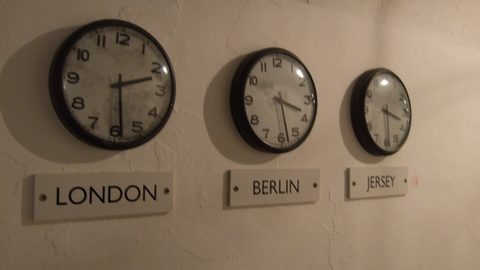 Bucharest Time Zone and Working Hours Overlap with Clients
Bucharest runs on EET and EEST, with daylight saving dates that don't always match the US. Map your working overlap with London, New York, and Sydney.
Bucharest Time Zone and Working Hours Overlap with Clients
Bucharest runs on EET and EEST, with daylight saving dates that don't always match the US. Map your working overlap with London, New York, and Sydney.
-
 A Bucharest Winter Workation Is Dark, Cheap and Genuinely Productive
A thirty-day winter workation in Bucharest costs less than a summer week in Lisbon, with empty museums, deep-focus café days, and Therme's thermal pools as your office escape hatch.
A Bucharest Winter Workation Is Dark, Cheap and Genuinely Productive
A thirty-day winter workation in Bucharest costs less than a summer week in Lisbon, with empty museums, deep-focus café days, and Therme's thermal pools as your office escape hatch.
-
 Romania Internet Speed and Getting a Local SIM for a Month
Romania's internet is fast and cheap, but a 30-day stay needs the right SIM. Compare Digi and Orange prepaid plans at OTP airport with current prices and GB caps.
Romania Internet Speed and Getting a Local SIM for a Month
Romania's internet is fast and cheap, but a 30-day stay needs the right SIM. Compare Digi and Orange prepaid plans at OTP airport with current prices and GB caps.