Working Remotely From Romania in Winter Costs and Daily Reality
A practical guide to Working Remotely From Romania in Winter Costs and Daily Reality.


What a Romanian winter workation actually feels like
Working remotely from Romania in winter means short days, cold pavements and a rhythm set by the sun disappearing well before five in the afternoon. It is not a beachside laptop fantasy. The tradeoff is a country where broadband rarely stutters, living costs stay predictable through the coldest months and the Schengen entry rules became refreshingly simple at the start of 2025. the guidance walks through the daily reality of a winter workation in Bucharest and Brașov, covering weather, connectivity, heating bills, train travel between cities and the visa and tax rules that matter if you plan to stay beyond a short visit.
Daylight, cold and the shape of a working day
In December, Bucharest delivers an average daily high of 4°C and a low of minus 3°C. Brașov is a degree colder at 3°C and minus 4°C, and it records rain or snow on roughly ten days in the month, the highest count among major Romanian cities. Neither city is extreme by continental standards, but the real constraint is light. Around the winter solstice, daylight shrinks to about eight hours and fifty minutes, with sunset falling between 16:35 and 16:45. A remote worker on a Western European or North American schedule will finish the working day in darkness for weeks on end.
Editorial advice: If your work depends on natural light for video calls or morale, book accommodation with large south-facing windows and position your desk accordingly. In Brașov, the mountain backdrop can darken streets earlier than the official sunset time suggests, so a short lunchtime walk becomes valuable. Factor the light window into your daily stand-up schedule rather than fighting it.

Internet speeds that hold up when it matters
Romania's fixed broadband remains a genuine strength. Median download speed on fixed connections sits around 270 Mbps, while median mobile download speed is approximately 80 Mbps, based on measurements from the national regulator's Netograf platform. These are not peak marketing figures but medians drawn from real user sessions, which means a typical apartment in Bucharest or Brașov will deliver enough headroom for simultaneous video calls, large file transfers and streaming without friction. Coworking spaces piggyback on the same infrastructure, so connection quality rarely becomes a differentiator between working from a rented flat and a dedicated desk.
Editorial advice: Before committing to a monthly rental, ask the host for a screenshot of a recent speed test taken at the router and, separately, at the spot where you would set up your workstation. Mobile data works well as a fallback in cities, but in the courtyards of Brașov's old town or inside thick-walled blocks, 4G signal can dip. A prepaid SIM with a generous data allowance costs little and buys peace of mind.
What it costs to stay warm for four months
Heating is the largest seasonal expense you will face that differs from a summer stay. For a two-room apartment of about fifty square metres in an uninsulated block, heated by an individual gas boiler, the four peak months from November through February cost roughly 1,452 lei in total. That figure is based on the capped residential gas price of 0.31 lei per kilowatt-hour. The cap is scheduled to remain in force until 31 March 2027. After that date, or if the government revises the scheme earlier, costs could shift. Electricity prices have been fully liberalised since July 2025, so an apartment that supplements gas heating with an electric radiator will see a higher bill.
Editorial advice: When comparing rentals, prioritise apartments with a recent energy performance certificate or at least a clear description of insulation and window quality. A well-sealed flat in a modern block can halve the heating load. Ask the landlord whether the boiler has been serviced recently; a neglected unit burns more gas for the same warmth. Before signing, check the current gas and electricity price caps on the Romanian Energy Regulatory Authority price comparison tool, because supplier offers and government schemes can change between booking and arrival.
Moving between Bucharest and Brașov without a car
The fastest direct InterCity train from Bucharest North to Brașov takes about two hours and fifteen minutes. A second-class adult ticket costs 81.08 lei. The line is well-travelled and the journey time is short enough that a weekend in Brașov while keeping a home base in Bucharest is entirely practical. For those considering a longer arc that includes Transylvania's interior, the fastest direct InterCity from Bucharest North to Cluj-Napoca takes roughly eight hours and fifty-four minutes, routing through Brașov and Sighișoara. That is a full working day on rails, not a quick hop.
Editorial advice: Train timetables and fares are revised with the annual schedule change, typically in mid-December. Always pull live itineraries and buy tickets through the official CFR Călători booking platform rather than relying on a screenshot from a blog. If you plan to work on the train, the Brașov run is short enough that a seat and a charged laptop battery will suffice; on the Cluj journey, a first-class upgrade buys a quieter carriage and a power socket, which matters when you need to join a call from the rails. Delays occur, so avoid scheduling a client presentation within an hour of your scheduled arrival.
Schengen entry, the digital nomad visa and the tax clock
Romania became a full Schengen Area member on 1 January 2025, removing all internal land-border checks with Hungary and Bulgaria. Air and sea border controls had already disappeared on 31 March 2024. For non-EU third-country nationals, this has a concrete consequence: every day spent in Romania now counts against the standard Schengen allowance of ninety days in any rolling one-hundred-and-eighty-day period, cumulated with stays in other Schengen states. A weekend in Budapest or Vienna chips away at the same allowance.
For stays beyond that limit, Romania offers a digital nomad visa, formally the long-stay D/AS. The minimum monthly income threshold is set at three times the average gross monthly salary and is recalculated annually. The reference wage for 2026 produced a threshold of 27,576 lei, approximately 5,240 euro. The visa fee for applications submitted through the e-Visa portal rose to 300 euro from late April 2026. Applicants must hold private health insurance valid in Romania for the entire stay with minimum cover of 30,000 euro.
The tax picture is unusually clean. Under Law no. 69/2023, salary income earned from a company registered outside Romania is exempt from Romanian income tax and social contributions, provided the individual is present in Romania for no more than 183 days in any consecutive twelve-month period ending in the relevant calendar year. Cross that threshold, and Romanian tax residency kicks in, bringing worldwide income into scope. The 183-day clock runs independently of the visa's validity, so a digital nomad who stays for eleven months on a valid visa may still trigger tax residency.
Editorial advice: Because the income threshold, visa fee and residence permit card fee are set by the Ministry of Foreign Affairs and the General Inspectorate for Immigration respectively, always confirm the current amounts on the official e-Visa portal before filing an application. The threshold changes annually when the state social insurance budget law publishes a new average gross salary. If your income hovers near the minimum, apply as soon as the updated figure is published to avoid a rejection based on a stale number. Track your Schengen days and your Romanian presence days in a shared calendar that your accountant or HR department can see; the 183-day tax residency test is strict and ANAF, the national tax authority, cross-references entry and exit records.
Sources and verification
- home-affairs.ec.europa.eu — Research source checked for this guide
- mae.ro — Research source checked for this guide
- remoteworkeurope.eu — Research source checked for this guide
- stampednomad.com — Research source checked for this guide
- static.anaf.ro — Research source checked for this guide
- static.anaf.ro — Research source checked for this guide
Read next
-
 Aparthotels and Long-Stay Rates When a Bucharest Hotel Beats a Flat
-
 Where to Base Yourself in Romania for a Month City by City Breakdown
-
 Flying Into Romania for a Month Otopeni Low Cost Carriers and the Wizz Factor
Flying into Romania for a month means luggage rules and route frequency matter more than a headline fare. OTP, Wizz Air, and the real cost of a 30-day return.
-
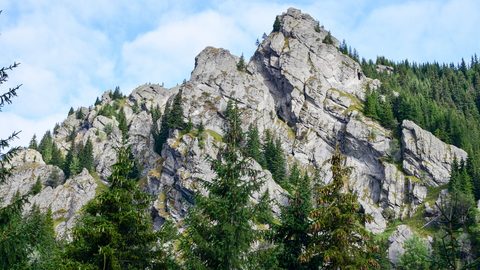 Weekends in Bucharest When You Are Not Leaving After Three Days
-
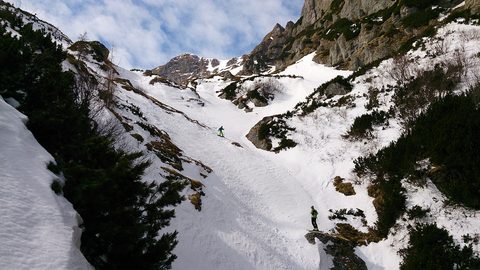 The Romanian Year for a Month-Long Stay Including the Ugly Parts
-
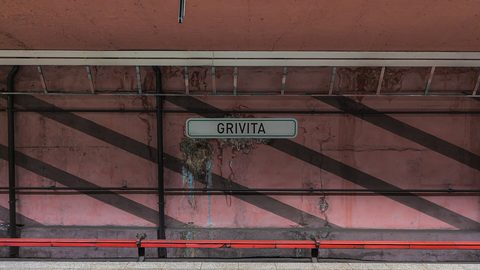 Getting Around Bucharest for a Month Transit Passes Trains and the Car Question
-
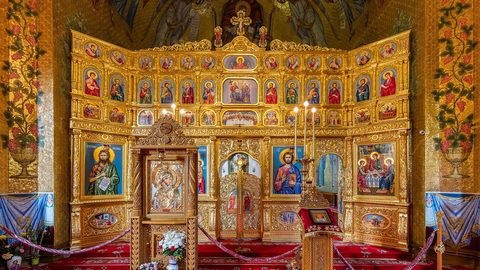 Weekend Trips From Bucharest That Fit Around a Full Work Week
A practical guide to Weekend Trips From Bucharest That Fit Around a Full Work Week.
-
 Romania Workation Internet Backup Plans Beyond Cafe WiFi
A practical guide to Romania Workation Internet Backup Plans Beyond Cafe WiFi.
-
 Cluj or Bucharest for a One Month Workation
A practical guide to Cluj or Bucharest for a One Month Workation.